Raising Monarchs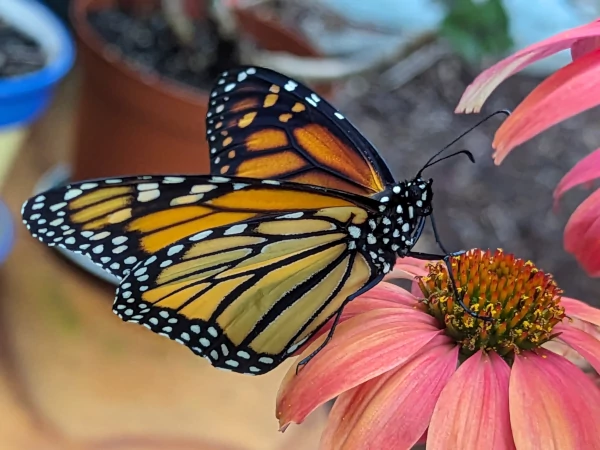
The PlightOnly an estimated two to ten percent of monarch caterpillars survive to become butterflies. Habitat loss, rampant use of herbicides and pesticides commercially and residentially, combined with climate change have made the world even more challenging for these magnificent creatures. Every spring monarch butterflies emerge from a deep slumber in pine forests in Mexico or Southern California. They begin a multi-generation process of flying north, mating, and laying eggs before dying. Each generation moves a little further North until late summer or early fall when the fourth generation, a super generation, hatches on milkweed plants in the Northern United States and Canada. Just like those before them, they will eat exclusively milkweed and rely on their distinctive markings to scare away some would-be predators and often sheer luck to stay hidden from others. Milkweed contains cardenolides, a steroid derivative, which makes the caterpillars toxic to many birds and animals that might try to consume them. Unlike those before them, the super generation will live for several months and fly up to 2,500 miles back to the forests their great-grandparents emerged from early in the year. 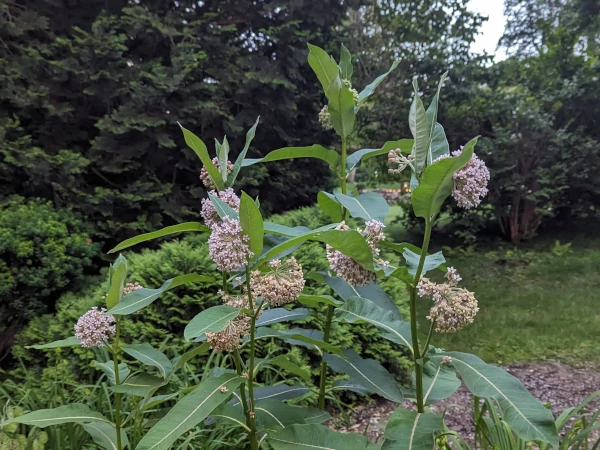
Unfortunately, some cultivated, non-native varieties of milkweed such as tropical milkweed, contain fewer cardenolides, making the monarch caterpillars less toxic or bad tasting. Some predators may have learned that they can eat the caterpillars without ill effects or unpleasant taste. Monarch caterpillars will eat and grow to 2,000 times their original size. In order to keep growing, they must molt, or shed their old skin, which they outgrew to take on and grow into their new skin. They will make a chrysalis in about two weeks. Two weeks from that, they will eclose, or emerge, from their chrysalises as butterflies. After drying their wings for a few hours they will get stronger, and take off on their epic journey North or South, depending which generation they are part of. After the first day after eclosing, they will drink nectar from flowers along their way. 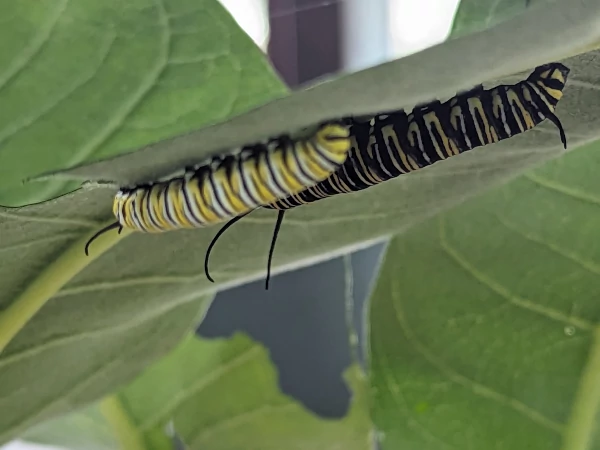
Today there is less milkweed, particularly in the corn belt where monarchs East of the Rockies lay eggs as generations head North in the spring and early summer. There are also fewer pesticide-free flowers available for adult monarchs heading North or when the super generation stops to refuel on nectar on their journey South before overwintering in Mexico or Southern California. 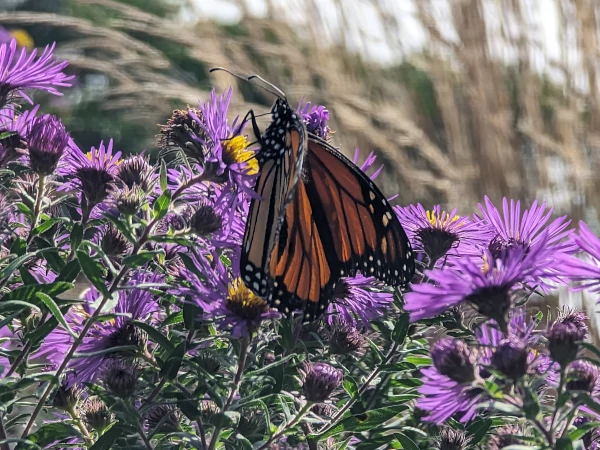 Risks and Responsible Raising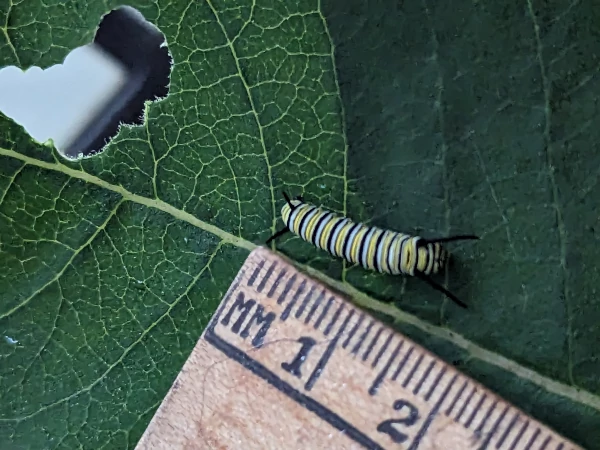
Many people with the best of intentions attempt to raise too many monarch caterpillars and/or don't have access to eggs or caterpillars and purchase them online or from a mass-breeder. Unfortunately, both of these situations more often than not lead to unhealthy adult monarchs, spreading of diseases and parasites, promoting inferior genetics and leading to adult butterflies that are not fit for survival. Housing too many caterpillars together makes them more susceptible to disease and parasites. They can also become aggressive if they feel they must compete for milkweed leaves. More timid individuals won't eat enough to grow as much as they should to become healthy butterflies. 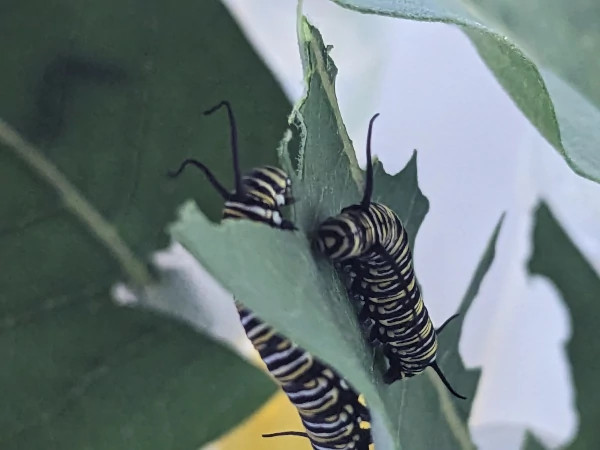
Buying them from large scale breeders leads to less genetic diversity and increases the odds that inferior genes will be spread farther in the population then would naturally occur in exclusively wild raised monarch populations. Handling caterpillars creates stress and impairs healthy development and growth. 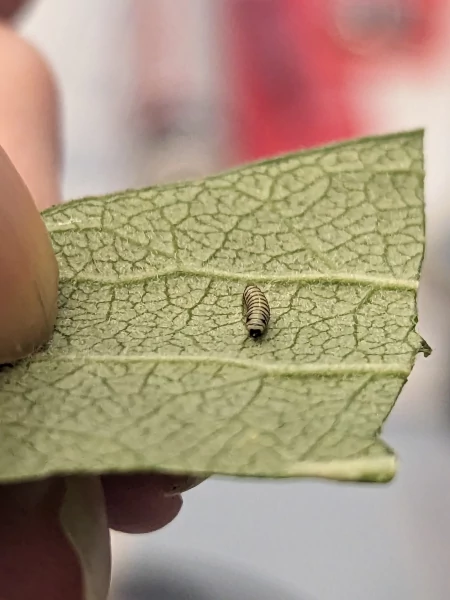
Improperly prepared leaves can increase the chances that caterpillars ingest toxins. Natural changes in daylight and temperature provide signals for monarch development. Monarchs that are kept indoors with less exposure to these changes do not develop as quickly or as well and, at least in lab studies, do not demonstrate critical navigation abilities necessary to the great migration and future survival of the species as wild monarchs. 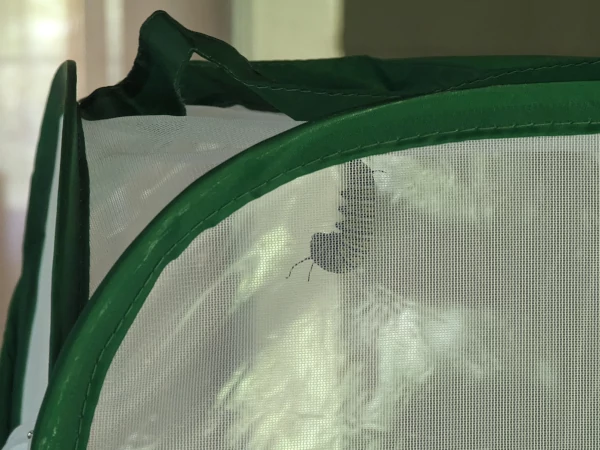
Raising third and fourth generation monarchs 2023The first summer in my current house, I noticed one lonely common milkweed plant growing by the door. I left it for years with no caterpillar sightings. Eventually, it grew runners and additional plants sprung up around my garden. Then I noticed monarch butterflies hovering around the plants. Days later I observed tiny caterpillars that were competing with aphids for milkweed. While I tried to manually remove the aphids, the plants continued to be swarming with wasps, hornets, flying ants and regular ants. The caterpillars sadly disappeared despite my best efforts to swat and shoo predators away (slightly ridiculous and hopeless when you think about it) and remove their desirable food source (Oleander aphids). I feared that monarchs in my yard did not stand a chance due to predatory insects. I realized that with a screened porch I have a reasonably safe place to keep them where they would get exposure to temperature and light fluctuations. I researched how to care for them, purchased an enclosure and supplies for keeping fresh milkweed for them. I vowed to only keep as many as the enclosure was recommended for AND I had one full sized milkweed plant to feed since in the wild a female butterfly tries to lay only one egg on each plant (the caterpillars do eat a lot!). 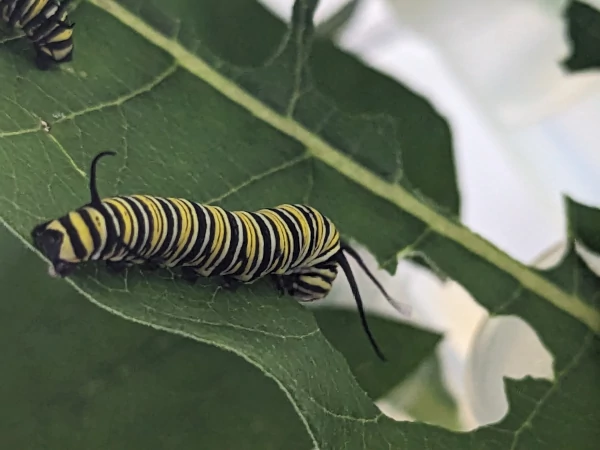
I did not notice any monarch butterflies around the plants, but searched all twelve plants carefully. During the third week of July I found two small caterpillars by looking at the leaves from underneath. I continued finding one or two per day until I had seven. I stopped looking as I did not want to find and feel compelled to put in my enclosure, third or later instar caterpillars that would be more likely to be parasitized. 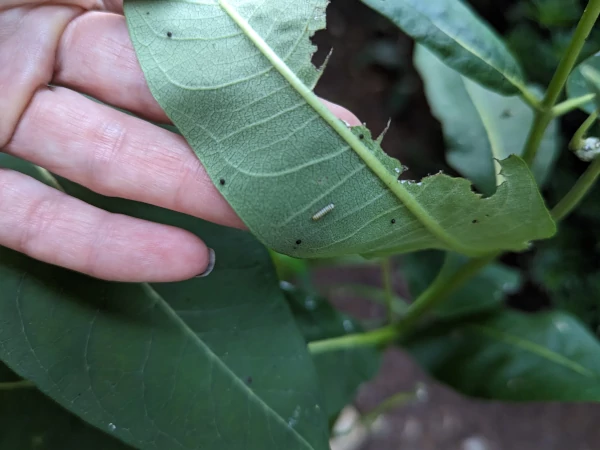
I rinsed and provided fresh milkweed leaves every day. I transferred the caterpillars to fresh leaves by cutting the leaves they were on around them and placing the piece on a new leaf so as not to handle them. Every few days they would become very still for about twelve hours or so, while they molted. They would emerge bigger and eat more. By the third and fourth instar stages I gave them a few fresh leaves each day. At the fifth instar I gave them fresh leaves multiple times per day. I also swept up their droppings, or frass, once or twice per day. They were more active and ate more on days when it was in the 90's. 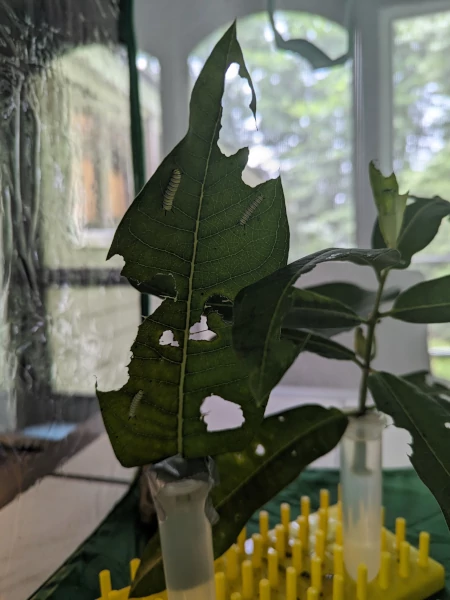
They moved to the top of their enclosure, hung in "J" formation and then transformed into chrysalises. The chrysalises were originally bright green. After a few days golden dots appeared on them. After fourteen days they each eclosed, or emerged, from their chrysalis as a beautiful butterflies. Two were male and five were female. The first two eclosed on a cold rainy afternoon, so I kept them overnight. The others I released a few hours after eclosing. They needed some time to stretch, dry and strengthen their wings. When they were ready they would become very active, walking and flitting around their enclosure. 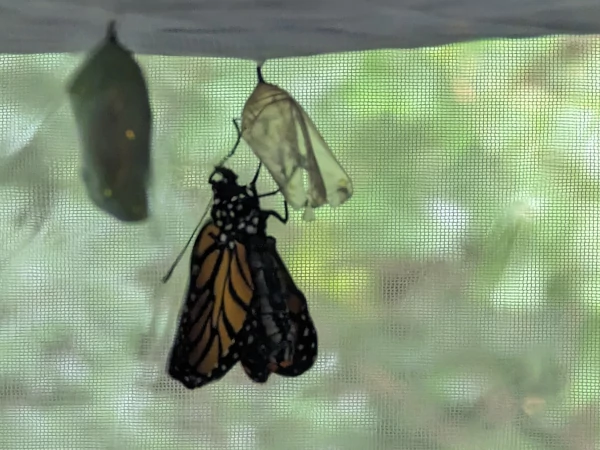
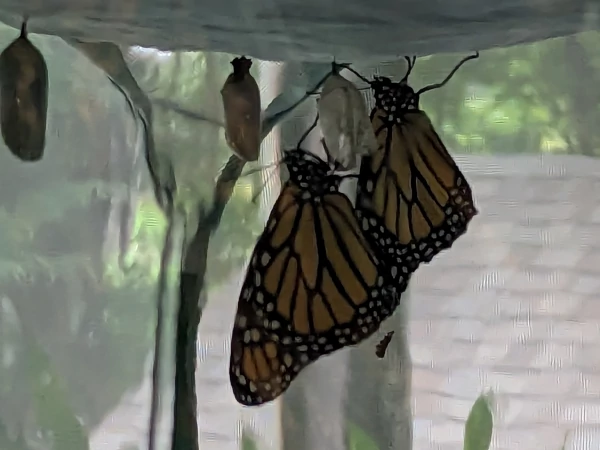
While the first batch were still chrysalises, I noticed a monarch around the milkweeds. I found two small, first instar caterpillars and three eggs over the course of three days. I kept them in a larger Tupperware container. I waited until the others had been released, and sanitized their enclosure before transferring the second batch into the enclosure to reduce the chance of spreading disease or parasites from the first batch, particularly Ophryocystis elektroscirrha (OE). I wished I had a second enclosure as I had to keep them in the container a couple of days longer than I would have otherwise. 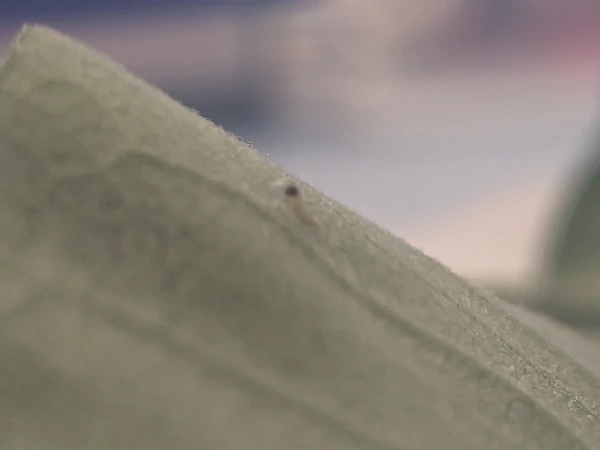
The second batch progressed in a similar fashion. The days and nights were cooler so they were less active. During a warm spell when they were at fourth and fifth instar stages they gained some ground eating enthusiastically and growing quickly. They also eclosed after fourteen days from forming their chrysalises. 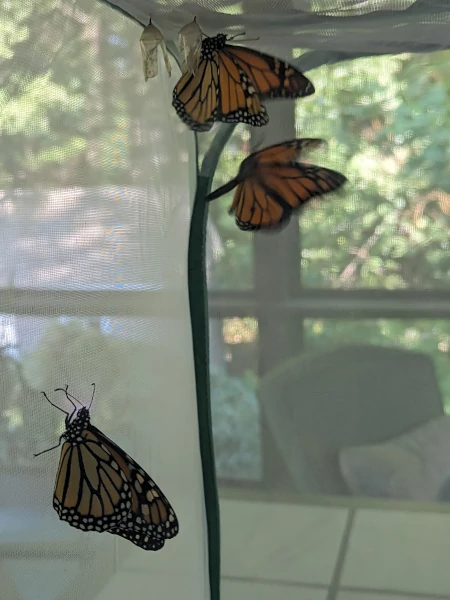
Watching them progress through each stage was amazing. They are remarkable creatures in how they so naturally move through such dramatic transformations: from tiny egg to tiny, barely visible, translucent caterpillar with a black head. They quickly turn green after eating. Then they molt for the first time and appear cream. Then they molt again and show characteristic stripes and tiny horns, and finally after the fourth and fifth molts, they look like the traditional monarch caterpillar often pictured with bold stripes and graceful tendrils on both ends. Next they literally split down the middle and turn bright green, losing their tendrils, legs and faces to become chrysalises. Finally they break free once again as velvety insects with long legs and striking orange and black wings. It's neat how they know to stay on the undersides of leaves, even notching them as they grow bigger so the leaves would droop down and hide them better. And of course, how they know where to migrate is simply incredible. 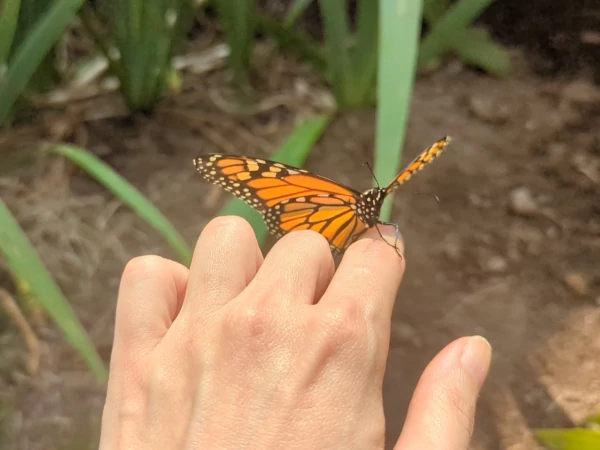
It's likely that I will raise monarchs again in the future assuming I have sufficient milkweed and time to care for them. It is definitely a commitment. More beneficial, I will continue refraining from using pesticides, herbicides and fertilizer. I will also continue replacing more of the lawn each year with native flowers to provide more habitat for these magnificent creatures along with many other types of wildlife that reside in my community. 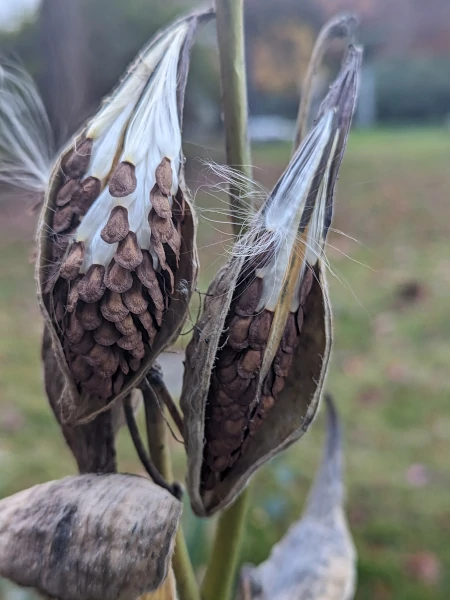
|